Save Big With Train Travel In Europe: Your Ultimate Guide
Author:Andy
Train travel in Europe is surprisingly easy and often way more relaxing than flying. The network links both big cities and small towns, so it’s possible to hop from one place to another without worrying about airport lines or security checks.
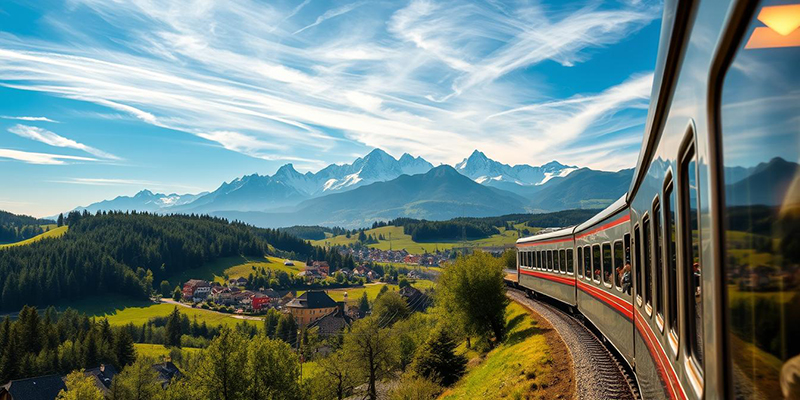
Seats are usually spacious, trains leave frequently, and the views along the way—rolling hills, vineyards, quaint villages—can turn even a long ride into part of the adventure. Watching the countryside go by while sipping coffee or reading a book has a charm you just don’t get on a plane.
Planning Your Train Trip
When it comes to travelling by train across Europe, having the right resources can make all the difference. Rail Europe is a good starting point, offering comprehensive schedules, fare options, and route information across multiple countries.
For country-specific promotions or detailed planning, checking national railway websites like SNCF (France), Trenitalia (Italy), Renfe (Spain), ÖBB (Austria), and DB (Germany) can provide more accurate and up-to-date information. For cross-border journeys, bahn.de is particularly useful, showing connections, pricing, and departure times even for routes outside Germany.
To quickly compare multiple operators or find alternative options, I often use Trainline, Omio, or Rome2Rio. These platforms make it easy to check if a bus or short flight might be faster or cheaper for a specific leg.
Finding the Best Deals
“Saver” tickets, such as Sparpreis or Super Sparpreis on DB, can offer discounts of 30–50% when booked early, which adds up across several legs. Calendar alerts for ticket releases are useful for catching early-bird fares as soon as they appear. For cross-border routes, checking multiple national sites often pays off; for instance, a ticket from Prague to Berlin may be cheaper through Czech Railways (ČD) than via DB, even though the seat is identical.
Seasonal or high-demand routes often have weekend deals or off-peak discounts not immediately visible on main pages. Subscribing to newsletters or regularly visiting the “offers” section can help spot these. Slightly adjusting departure or return times, even by an hour or two, can also reduce costs without compromising convenience.
Picking the Right Seat
For high-speed or long-haul trains, reserving a seat is crucial. Without it, standing in corridors or being separated from companions is a real risk.
I always check VagonWEB or operator-specific seat maps to pick a spot with a window, extra legroom, or away from noisy groups. For solo travellers, choosing a seat near the middle or in quiet-car sections can make a big difference on overnight journeys.
Booking windows vary by country: German and Austrian trains often open six months ahead, whereas Spanish Renfe or seasonal lines may only release tickets 60 days before departure.
For multi-leg trips, I sometimes split tickets—buying two separate legs instead of a through-ticket—which can be cheaper and gives more flexibility if plans change. On regional trains, I often skip seat reservations entirely, saving money while still ensuring travel comfort.
Maximize Savings: Passes vs. Point-to-Point
Figuring out whether to go with a Eurail or Interrail pass or individual tickets usually comes down to numbers and your travel style.
Passes are convenient, but they aren’t always the cheapest option—especially in countries where regional or commuter trains are very affordable. For example, a high-speed ticket from Paris to Lyon booked two months in advance costs around €35–€50, while a multi-day Eurail pass covering France can run €150–€200, so for short, fixed itineraries, buying single tickets often saves money.
Point-to-Point Tips
Booking 2–3 months ahead on high-speed lines usually locks in the lowest fares. Splitting tickets—buying separate legs like Paris–Lyon and Lyon–Marseille—can cut costs by 10–20%. Checking multiple departure times helps spot cheaper slots; early morning and late evening trains tend to be discounted.
Rail Passes
Passes are handy if your plan is multi-country or spontaneous. In Germany, the Deutschland-Ticket costs €49 per month, giving unlimited travel on regional trains, though high-speed ICE lines aren’t included. Seasonal promotions—like France’s Ouigo weekend fares—can sometimes be much cheaper than using a standard pass for the same route.
Comparison Tools
Apps like Trainline, Omio, and Rome2Rio are great for quick comparisons across operators. Official national sites—bahn.de, SNCF Connect, Trenitalia, Renfe—often reveal early-bird or off-peak fares that third-party apps don’t always show. For cross-border tickets, checking both countries’ sites can save a noticeable amount; for instance, a Prague–Berlin ticket can be €10–€15 cheaper on Czech Railways (ČD) than through DB.
Packing Smart & Handling Luggage
Hiking up a flight of stairs with a giant suitcase is nobody’s idea of fun, especially in European train stations where aisles are narrow and platforms uneven.
Keeping packing light really pays off—4–5 days’ worth of clothes and planning for laundry stops along the way makes life much easier. A European-sized carry-on plus a small daypack lets you move quickly between trains and through busy stations. Rolling clothes or using packing cubes saves space and keeps things organized.
For longer trips or multiple stops, a soft duffel bag fits overhead racks or under-seat spaces better than a hard-shell suitcase. Test the bag at home—if it’s tiring to carry for ten minutes, it will be exhausting on a train.
Luggage Storage Tips
Most stations have lockers (Schließfächer) or staffed counters for short-term storage. Always check closing times; some shut early, others overnight.
When lockers are full, services like Bounce or city-specific options (for example, Budapest Luggage Storage) are handy and affordable. Think about your day: leave bags at the station if the hotel is far, or at the hotel if sightseeing is nearby, so you’re not hauling stuff back and forth.
Adding a small lock or TSA-approved combination lock keeps items secure, and carrying valuables—passport, phone, wallet—in a daypack keeps them close during transfers or a quick walk around the station.
On the Day of Departure
Many European cities have multiple major train stations, so double-check the departure station printed on your ticket. For example, Paris has Gare du Nord, Gare de Lyon, and Gare Montparnasse, all serving different routes. Showing up at the wrong station can cost an hour or more in transit.
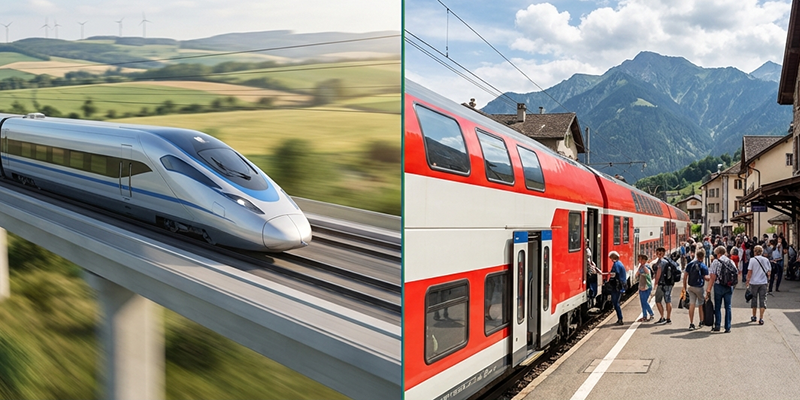
Once at the correct station, ignore permanent signs and focus on the digital departure boards. Platforms are often assigned only 10–15 minutes before departure, so give yourself enough time to walk from the entrance, buy last-minute snacks, and locate your carriage.
Arriving at the platform early also helps secure luggage space in the racks near the doors before they fill up, which can be especially important on busy morning or evening trains.
Learning a few key words in the local language helps. Track is binario/voie/gleis, platform is peron/quai, carriage is voiture/wagon, and seat is posto/siège. Knowing these allows you to read departure boards and find the correct coach quickly, avoiding unnecessary stress or last-minute sprints.
For long trains, it’s worth checking which end the quiet or first-class carriages are located, since digital boards often indicate carriage numbers alongside the platform.
Life On Board: Comfort and Security
Provisions and Supplies
Before boarding, stock up on essentials like water, snacks, and wet wipes at a nearby supermarket or station kiosk. Onboard bistro cars are convenient, but prices can be high, selections limited, and operating hours unpredictable—especially on regional trains or overnight services.
Luggage and Safety
Think about where your bags go before settling in. Large suitcases should be placed in racks near the carriage doors for easy access at stops, while smaller backpacks or duffels go on the overhead racks, ideally within sight. On crowded trains, securing straps or keeping a small bag in your lap helps prevent theft.
Solo travellers should never leave valuables unattended, even for a few minutes in the restroom or bistro car. Keep your passport, phone, and wallet in a small daypack you can carry with you at all times.
Night Trains and Sleep
Night trains offer the charm of waking up in a new city, but they are rarely silent. Expect track noise, corridor activity, and mechanical hums throughout the night if you book a sleeper or couchette, pack earplugs, an eye mask, and noise-canceling headphones.
Some travellers even bring a light travel pillow or a thin blanket for extra comfort. Consider your carriage choice: upper bunks can be less convenient for frequent bathroom trips, while lower bunks offer easier access and slightly less sway.
Bring small personal items in a pouch within reach—phone charger, lip balm, or a reusable water bottle. On some long-distance trains, power outlets are not guaranteed, so carry a fully charged portable battery. Watch for quiet carriages or first-class sections, which tend to have fewer passengers and a calmer atmosphere, ideal for sleeping or reading.
Classic Routes and Local Secrets
Traveling Europe by train without flying gives a completely different perspective on the continent.
Paris → Milan → Venice
Take the TGV from Paris Gare de Lyon to Milan Centrale (≈7h). Early booking 2–3 months ahead can save €20–€30.
Milan: visit the Duomo, Galleria Vittorio Emanuele II, and Sforza Castle. Luggage can be stored at station lockers (small €6/day, large €9/day).
Venice: high-speed train from Milan (~2h30). Avoid crowds at Piazza San Marco; explore Dorsoduro for cafes and artisan shops. Venice station lockers are limited; consider hotel luggage storage if arriving mid-day.
Seat selection: check vagonWEB for window seats or quiet cars; high-speed trains often have family sections to avoid.
Venice → Florence → Pisa/Lucca
Florence: Trenitalia high-speed (~2h) or regional trains (~3h). Reserve seats in advance.
Optional day trips: Pisa Leaning Tower, Lucca city walls; regional trains cost €8–€12.
Use the left luggage counters at Santa Maria Novella station to explore without bags.
Northern Italy → Ljubljana → Bratislava
Ljubljana: explore the old town, markets, Dragon Bridge. Station lockers available for €4–€6.
Bratislava: hop off to see Blue Church (St. Elizabeth’s); city walk from main station ≈20 min. Pack small daybag for essentials; check train schedules on bahn.de or the local Slovak Railways site.
Bratislava → Budapest
Budapest stations: Keleti for east-bound, Nyugati for west-bound.
Food: skip tourist menus along Váci utca; head to Szimpla Kert ruin bar or food courts in shopping centers (€3–€5 meals).
Luggage: store large bags in door racks, small daypacks overhead. Check platforms 10–15 min before departure.
Budget and Regional Tips
Regional trains can be cheaper and scenic: e.g., Ljubljana → Zagreb €10 regional vs €20+ express.
Cross-border fares: always compare both countries’ sites for savings. Example: Prague → Berlin can be €10–€15 cheaper on Czech Railways (ČD) than DB.
Early departures or late evenings sometimes cheaper. Track promotions on Trainline, Omio, or official sites.
Vienna → Graz: rolling vineyards, small castles, villages. Train ≈2h30, regional tickets €20–€25.
With these route suggestions, seat selection, and local tips, it’s possible to travel efficiently, comfortably, and affordably while experiencing both major hubs and hidden gems across Europe.
Latest News
USA Road Trip Routes: Bucket List Ideas For 2026
February 26, 2026

European Luxury Day Spa Escapes You Can Actually Afford
October 31, 2025

10 Best Places To Go For Fun Family Vacations
October 3, 2025

Fun And Affordable Weekend Trip Ideas You'll Love
September 29, 2025
Sailing Into Paradise: Your Ultimate Cruise Vacation Guide
September 20, 2025
Lost, Delayed, Or Stolen Luggage? Don’t Panic—Follow These Steps
September 14, 2025